After a decade watching non-coders fail, these founders built what actually works
Speed without structure creates prototypes, not products. Raydian builds both.
Hey everyone 👋
Today, I am excited to publish a special featured interview on my newsletter that highlights the story and lessons from founder friends of mine: Ryley, Andre, and Greg.
They’re the founders of Raydian — a platform that helps non-coders ship real, deployed software instead of prototypes that never launch. I’ve got to know Greg from the Bubble community where I’ve followed his incredible work with Build Camp for years.
After spending nearly a decade building tools for non-technical people, this founding team realized something crucial: most AI-coding platforms are removing people from the building process entirely. So they built the opposite.
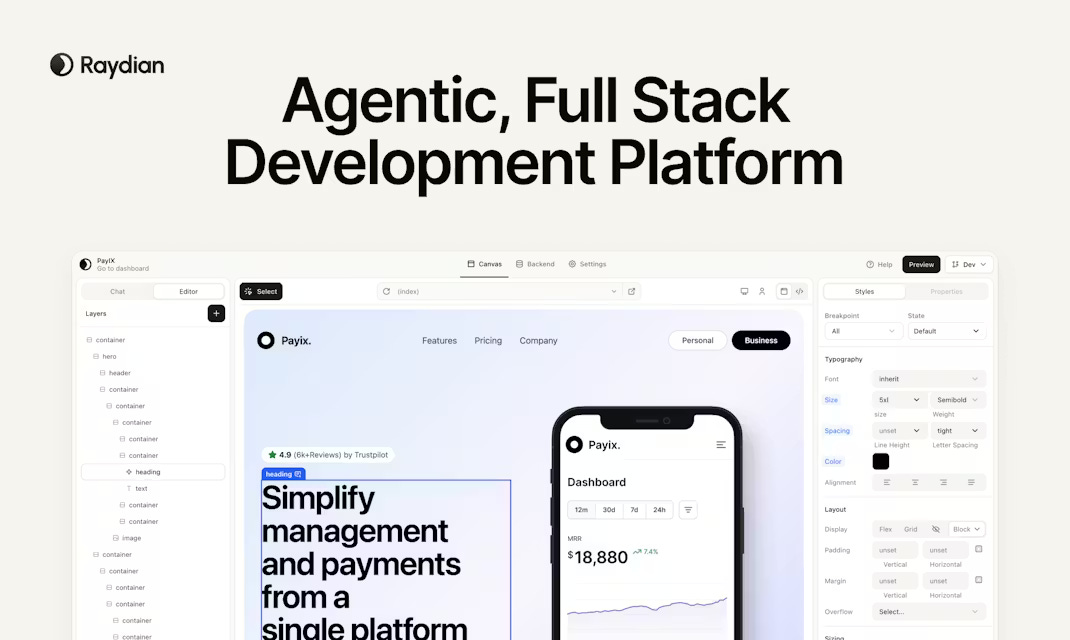
Raydian keeps builders in the center. It gives you real tools, real structure, and an AI sidekick that actually helps you build — not just generate code and hope it works. The result? Solopreneurs and small teams are shipping deployed apps, learning systems thinking and database architecture along the way, instead of iterating endlessly on demos that never see users.
Their north star is simple: they want their users to have users of their own. Not button-clickers. Builders.
I was genuinely curious about their journey, how they’re thinking about the intersection of AI and agency, and what they’ve learned the hard way. So I sent them a few questions a couple weeks ago that turned into this interview. Read on 👇
The Interview
1. In simple terms, what does Raydian do?
We make it possible for non-coders to ship real software. AI is a big part of that, but we’ve built a platform and a process around “vibe coding” — and we think that’s the difference between users building prototypes and users building deployed apps.
2. What’s the “earned secret” that set you off on this path?
We’ve spent a decade helping non-coders build software. We learned that even if users don’t want to start coding, they still want to understand how the web works — they’re curious about databases, systems thinking, architecture. Raydian is designed so people grow and learn as they build, not despite building.
3. How did you all meet as co-founders and what makes you excited to work together?
Ryley and Andre have been working together for years. When we started Raydian, I (Ryley) wrote down the best people I could think of to build it with, and Greg was at the top of the list. Our skillsets are complementary, but what really matters is that we genuinely care about the product — and that’s rarer than you’d think.
4. Can you share a wild “aha moment” or turning point in Raydian’s journey so far?
Probably the first time we went through the entire flow using our planner agent. It became very obvious that a structured approach was the path to building great apps inside Raydian. That moment clarified everything we were trying to do.
5. What’s the most surprising or non-obvious reaction you’ve received from early users?
The complexity of what users have been trying to build — especially early on. It pushed us to make Raydian powerful enough to support anything people could throw at it. We thought we’d see simple apps. Instead, users showed up with ambitious ideas that forced us to level up the platform.
6. Walk us through your biggest “this is way harder than we thought” moment.
We wanted Raydian to be a blend of AI and visual coding. Getting a visual editor that worked consistently across all scenarios? That was brutal. So many edge cases, so many places for things to break. It took tons of iterations and flat-out rebuilds before we got it right. That’s the unsexy part of building tools — the unglamorous work that actually matters.
7. What’s one piece of hard-earned advice you’d give to founders building developer tools?
It’s okay to say no, especially early on. You hear “listen to your users” so often that you feel obligated to build everything they ask for. But early on, focus is survival. Focus requires saying no. A lot. Make peace with it.
8. What are some initial reactions from showing Raydian to real people? Any lessons or iterations from there?
A lot of people have tried “vibe coding” approaches and expect us to follow a similar path. It’s fun to see their face when they realize Raydian actually keeps them at the center of the building process. AI is really powerful, but there’s a joy that comes from building something with intention. We’ve worked hard to preserve that feeling — the sense that you’re not just commanding an AI, you’re actually building.
9. Where can people learn more about Raydian and its latest PH launch?
Follow us on X at @raydian_dev and come join our community at forum.raydian.dev. We’d love to have you.
That’s a wrap on this featured interview — hope Ryley, Andre, and Greg’s journey sparked some ideas for you on how to bridge AI speed with the agency people actually need.
The lesson here? In the vibe code era, speed is abundant but understanding is scarce. The winners will be platforms that refuse the false choice between moving fast and building systems people can actually trust and control.
Earlier today, I helped hunt Raydian on Product Hunt. The team and I would love for your feedback, support and comments on the launch page as it can help more people discover the product.
Thanks for reading!